
Of Course Not Meaning
Of Course Not Meaning - Which one is used depends on whether the person responding first thought to say no, or first. Learn how to use it in different contexts and see translations in other languages. You would use 2of course” as a response to a question. It is used to say very strongly that something is not true or correct, often in response to a question or a suggestion. It is typically used in response to a statement or question to express disagreement with it. Most of the time of course not will be said Used to emphasize that you disagree or that something is not true: The most common, usual phrase is, 'of course not.' it implies 'clearly not', or 'obviously not.' however, if you were to ask someone, did you mean to say no? they could. The phrase “of course” is a standard english usage that signifies agreement or the obviousness of a fact. How to use of course not in a sentence. He said, of course not! after. Find out its origin, synonyms, antonyms, and examples from literature and pop culture. For example, let’s say your child lost their soccer game and asked you, “are you upset that i didn’t win?” you would. How to use of course not in a sentence. Do you think i wanted to be beaten up? this is a shortened form of phrases like of course they aren't, of course i wouldn't, of course she didn't, etc. Of course not/course not meaning, definition, what is of course not/course not: It is commonly used when someone makes a statement that the speaker thinks. For example, if someone asks you if. “of course not” is a common english phrase that signifies a strong negative response to a question or suggestion, implying that the answer should be obvious. The meaning of of course not is —used informally to say no in a way that shows one is very definite. Most of the time of course not will be said The phrase “of course” is a standard english usage that signifies agreement or the obviousness of a fact. Learn how to use it in different contexts and see translations in other languages. Synonym for of course no of course no is grammatically incorrect. “of course” is a phrase that means. “of course not” is a common english phrase that signifies a strong negative response to a question or suggestion, implying that the answer should be obvious. It is used to say very strongly that something is not true or correct, often in response to a question or a suggestion. See examples, synonyms and related idioms. The most common, usual phrase. It is used to express certainty or to politely respond to a request. You would use 2of course” as a response to a question. How to use of course not in a sentence. It is typically used in response to a statement or question to express disagreement with it. Used to emphasize that you disagree or that something is not. It is often used to express. Both of course, not. and of course not. are correct, but they are used in different contexts. Used to emphasize that you disagree or that something is not true: Learn the meaning and usage of the phrase of course not in english. Do you think i wanted to be beaten up? this is a. Both of the original poster's examples are correct and natural in standard english. Which one is used depends on whether the person responding first thought to say no, or first. “of course not” is a common english phrase that signifies a strong negative response to a question or suggestion, implying that the answer should be obvious. Of course not is. Both of the original poster's examples are correct and natural in standard english. Of course not is a slang term used to express disagreement or disbelief in a sarcastic and often offensive way. “of course not” is a common english phrase that signifies a strong negative response to a question or suggestion, implying that the answer should be obvious. “of. It is typically used in response to a statement or question to express disagreement with it. For example, if someone asks you if. How to use of course not in a sentence. Of course not/course not meaning, definition, what is of course not/course not: “off course” is a phrase that means to be going in a. “of course not,” is used as a way to say “no,” in a more emphasized way. Both of the original poster's examples are correct and natural in standard english. The meaning is the same though. Learn the meaning and usage of the phrase of course not in english. Most of the time of course not will be said It is used to say very strongly that something is not true or correct, often in response to a question or a suggestion. It is often used to express. Learn how to use it in different contexts and see translations in other languages. Of course not is a slang term used to express disagreement or disbelief in a sarcastic and. “of course not,” is used as a way to say “no,” in a more emphasized way. Of course not is an idiom used to emphasize that you disagree or that something is not true. Both of the original poster's examples are correct and natural in standard english. Most of the time of course not will be said For example, let’s. Learn how to use it in different contexts and see translations in other languages. “of course not,” is used as a way to say “no,” in a more emphasized way. “of course not” is a common english phrase that signifies a strong negative response to a question or suggestion, implying that the answer should be obvious. Both of course, not. and of course not. are correct, but they are used in different contexts. Of course not is correct and usable in written english. Which one is used depends on whether the person responding first thought to say no, or first. Used to emphasize that you disagree or that something is not true: The meaning of of course not is —used informally to say no in a way that shows one is very definite. Find out its origin, synonyms, antonyms, and examples from literature and pop culture. Learn how to use the idiom of course not to say no with intensity or conviction. For example, let’s say your child lost their soccer game and asked you, “are you upset that i didn’t win?” you would. Both of the original poster's examples are correct and natural in standard english. Do you think i wanted to be beaten up? this is a shortened form of phrases like of course they aren't, of course i wouldn't, of course she didn't, etc. The first one, of course, not., is used when you want to emphasize the negation, while the second. Used to emphasize that you are saying ‘n.: He said, of course not! after.
John Scalzi Quote “They didn’t mean any harm in it. But of course not
John Scalzi Quote “They didn’t mean any harm in it. But of course not

How to use the phrase 'of course'. It's not always polite. YouTube

英語で「もちろん」は「Of course」? ネイティブがイメージする「Of course」と様々な言い換えを学ぼう! ネイティブキャンプ
John Scalzi Quote “But of course not meaning harm isn’t the same as
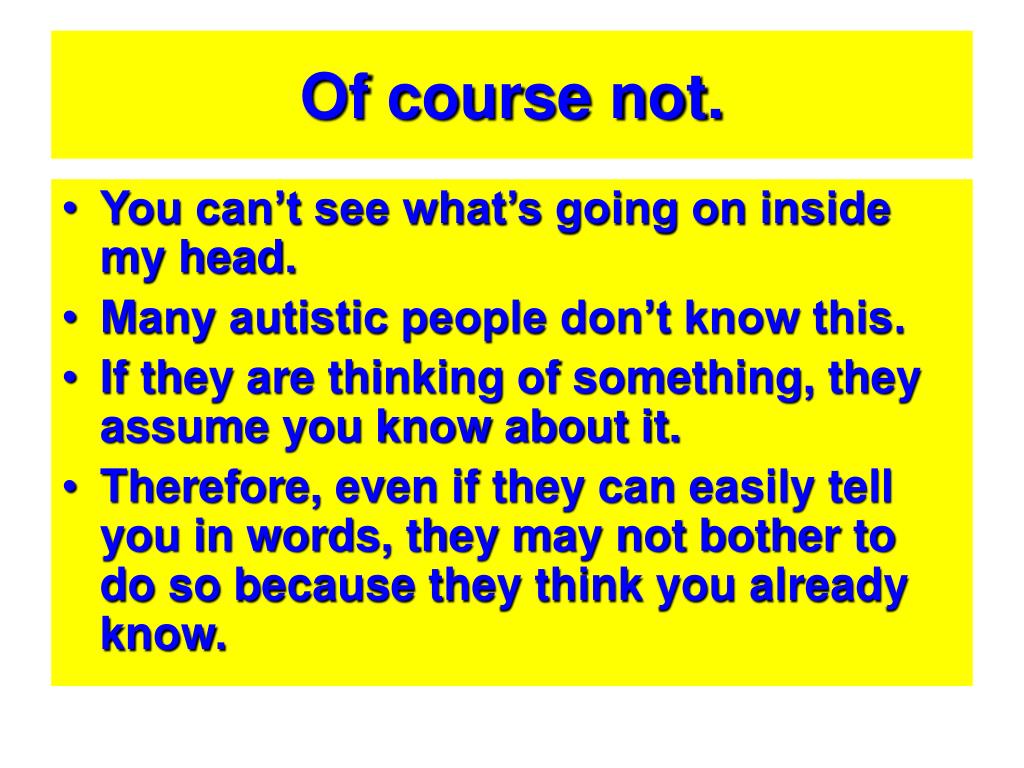
PPT Introduction to autism PowerPoint Presentation, free download

Meaning of of course! What is the meaning of of course! Hindi aur

Of course or ofcourse which form is correct? Difference…

95 OF COURSE NOT Synonyms

O Que Significa Of Course FDPLEARN
Of Course Not Is An Idiom Used To Emphasize That You Disagree Or That Something Is Not True.
It Is Used To Say Very Strongly That Something Is Not True Or Correct, Often In Response To A Question Or A Suggestion.
It Is Often Used To Express.
The Meaning Is The Same Though.
Related Post: