
But Of Course Meaning
But Of Course Meaning - This article will look at what it means and how to use it. But of course is a perfectly grammatical and idiomatic way to express agreement, acceptance, or acknowledgement in written english. 1 (also course informal) used to emphasize that what you are saying is true or correct: The phrase “but of course” is a completely different problem. The phrase “but of course” is a completely different problem. I'd like to know the meaning of but in the following dialogue: This article will look at what it means and how to use it. 'the wine's over there on the chest,' she said, 'i had the waiter open it.' b: “of course” is the proper phrase to use when you want to express certainty, agreement, or something that is obvious, while “ofcourse” is simply an incorrect spelling that. Do you want a glass with. “of course” is the proper phrase to use when you want to express certainty, agreement, or something that is obvious, while “ofcourse” is simply an incorrect spelling that. Learn the definition of 'but of course'. Actually, in this context, i would interpret both but of course, and but of course not as meaning the same thing: The phrase “but of course” is a completely different problem. If joanna asked dean to do something, he would not say but of course! he would probably say something like yeah, sure. so dean is imagining the other side of the. 'the wine's over there on the chest,' she said, 'i had the waiter open it.' b: We use of course to refer to things that are obvious or already known to the speaker and listener, or to everybody: This article will look at what it means and how to use it. This article will look at what it means and how to use it. ‘don’t you like my mother?’ ‘of course i do!’ ♢ ‘will you be there?’ ‘course i will.’ This article will look at what it means and how to use it. “of course” is the proper phrase to use when you want to express certainty, agreement, or something that is obvious, while “ofcourse” is simply an incorrect spelling that. Actually, in this context, i would interpret both but of course, and but of course not as meaning the. Actually, in this context, i would interpret both but of course, and but of course not as meaning the same thing: If joanna asked dean to do something, he would not say but of course! he would probably say something like yeah, sure. so dean is imagining the other side of the. Students will often hear english speakers saying, 'of. If joanna asked dean to do something, he would not say but of course! he would probably say something like yeah, sure. so dean is imagining the other side of the. Check out the pronunciation, synonyms and grammar. The phrase “but of course” is a completely different problem. Actually, in this context, i would interpret both but of course, and. “of course” is the proper phrase to use when you want to express certainty, agreement, or something that is obvious, while “ofcourse” is simply an incorrect spelling that. This expression means ' yes, obviously, without a doubt.', and is often used at the beginning of a response to. If joanna asked dean to do something, he would not say but. Actually, in this context, i would interpret both but of course, and but of course not as meaning the same thing: Do you want a glass with. A tropical climate is, of course, very humid, so we sweated all the time. ‘don’t you like my mother?’ ‘of course i do!’ ♢ ‘will you be there?’ ‘course i will.’ Professor layton. ‘don’t you like my mother?’ ‘of course i do!’ ♢ ‘will you be there?’ ‘course i will.’ Obviously, however, and is just as grammatical and idiomatic. But of course is a perfectly grammatical and idiomatic way to express agreement, acceptance, or acknowledgement in written english. This article will look at what it means and how to use it. “of course”. What does “but of course” mean? “of course” is the proper phrase to use when you want to express certainty, agreement, or something that is obvious, while “ofcourse” is simply an incorrect spelling that. A tropical climate is, of course, very humid, so we sweated all the time. But of course is a perfectly grammatical and idiomatic way to express. But of course is a perfectly grammatical and idiomatic way to express agreement, acceptance, or acknowledgement in written english. What does “but of course” mean? I do remember hearing decades ago stylistic advice not to start an independent. We use of course to refer to things that are obvious or already known to the speaker and listener, or to everybody:. Do you want a glass with. Browse the use examples 'but of course' in the great english corpus. Students will often hear english speakers saying, 'of course', or 'but of course'. “of course” is the proper phrase to use when you want to express certainty, agreement, or something that is obvious, while “ofcourse” is simply an incorrect spelling that. The. “of course” is the proper phrase to use when you want to express certainty, agreement, or something that is obvious, while “ofcourse” is simply an incorrect spelling that. ‘don’t you like my mother?’ ‘of course i do!’ ♢ ‘will you be there?’ ‘course i will.’ This expression means ' yes, obviously, without a doubt.', and is often used at the. Browse the use examples 'but of course' in the great english corpus. Obviously, however, and is just as grammatical and idiomatic. This article will look at what it means and how to use it. A tropical climate is, of course, very humid, so we sweated all the time. 1 (also course informal) used to emphasize that what you are saying is true or correct: If joanna asked dean to do something, he would not say but of course! he would probably say something like yeah, sure. so dean is imagining the other side of the. But of course is a perfectly grammatical and idiomatic way to express agreement, acceptance, or acknowledgement in written english. This expression means ' yes, obviously, without a doubt.', and is often used at the beginning of a response to. This article will look at what it means and how to use it. What does “but of course” mean? For example, i'm not sure i'd be able to finish this project. Do you want a glass with. “of course” is the proper phrase to use when you want to express certainty, agreement, or something that is obvious, while “ofcourse” is simply an incorrect spelling that. I do remember hearing decades ago stylistic advice not to start an independent. The phrase “but of course” is a completely different problem. What does “but of course” mean?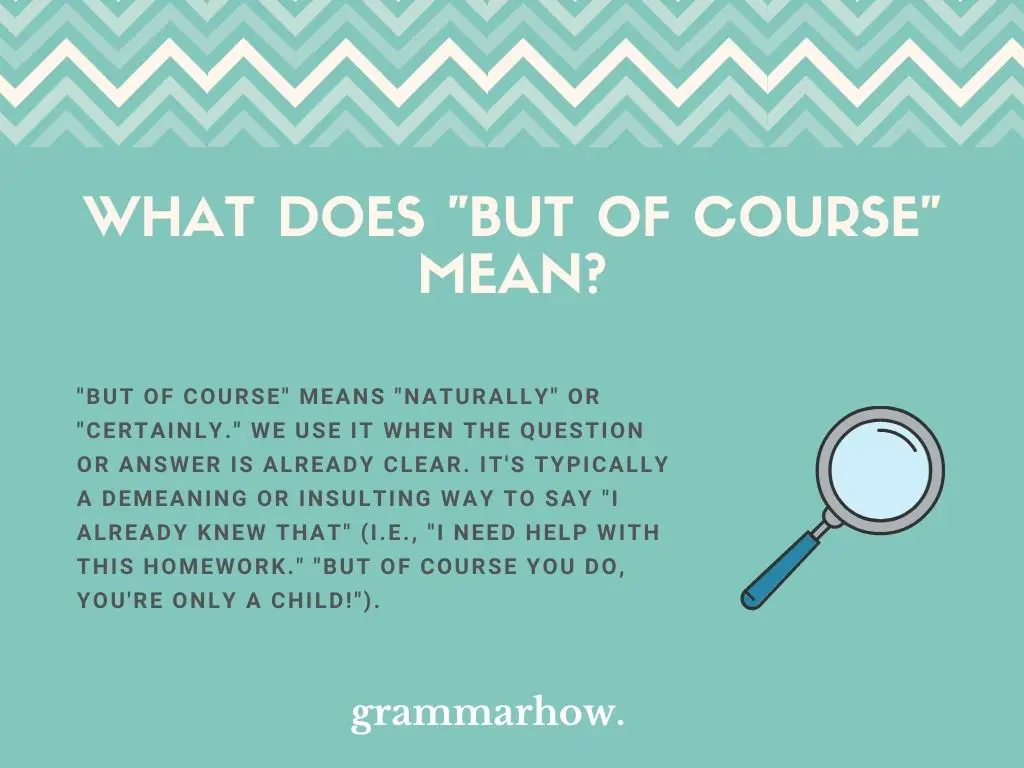
Manchester United's Luke Shaw out for 'number of weeks' with muscle

Of course — OF COURSE meaning YouTube
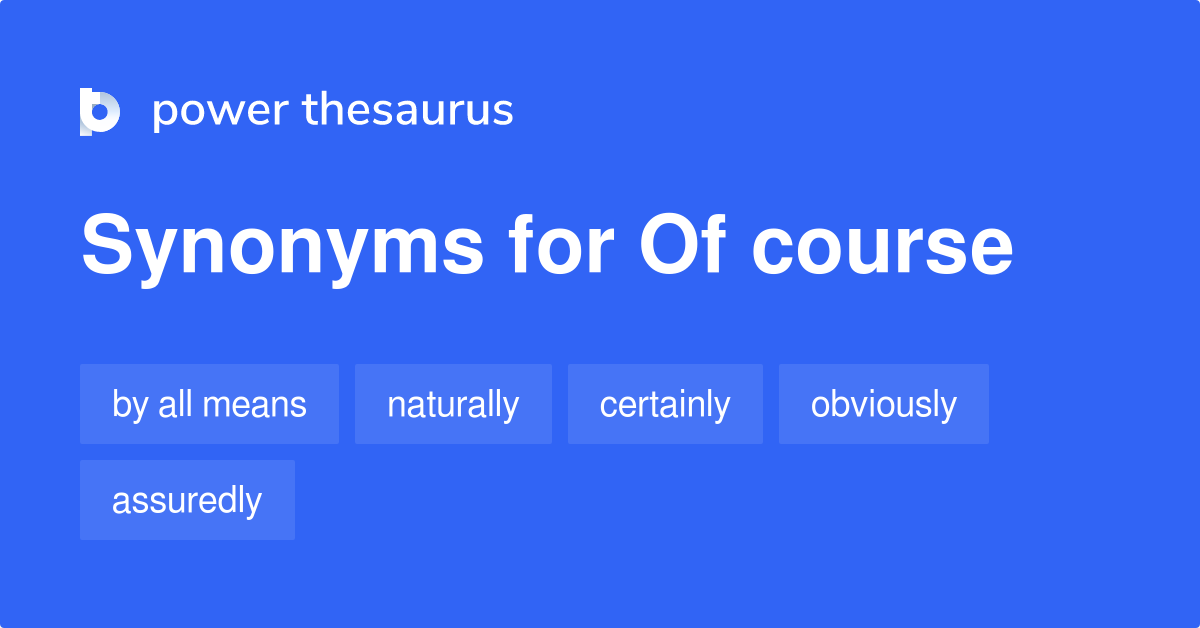
265 OF COURSE Synonyms
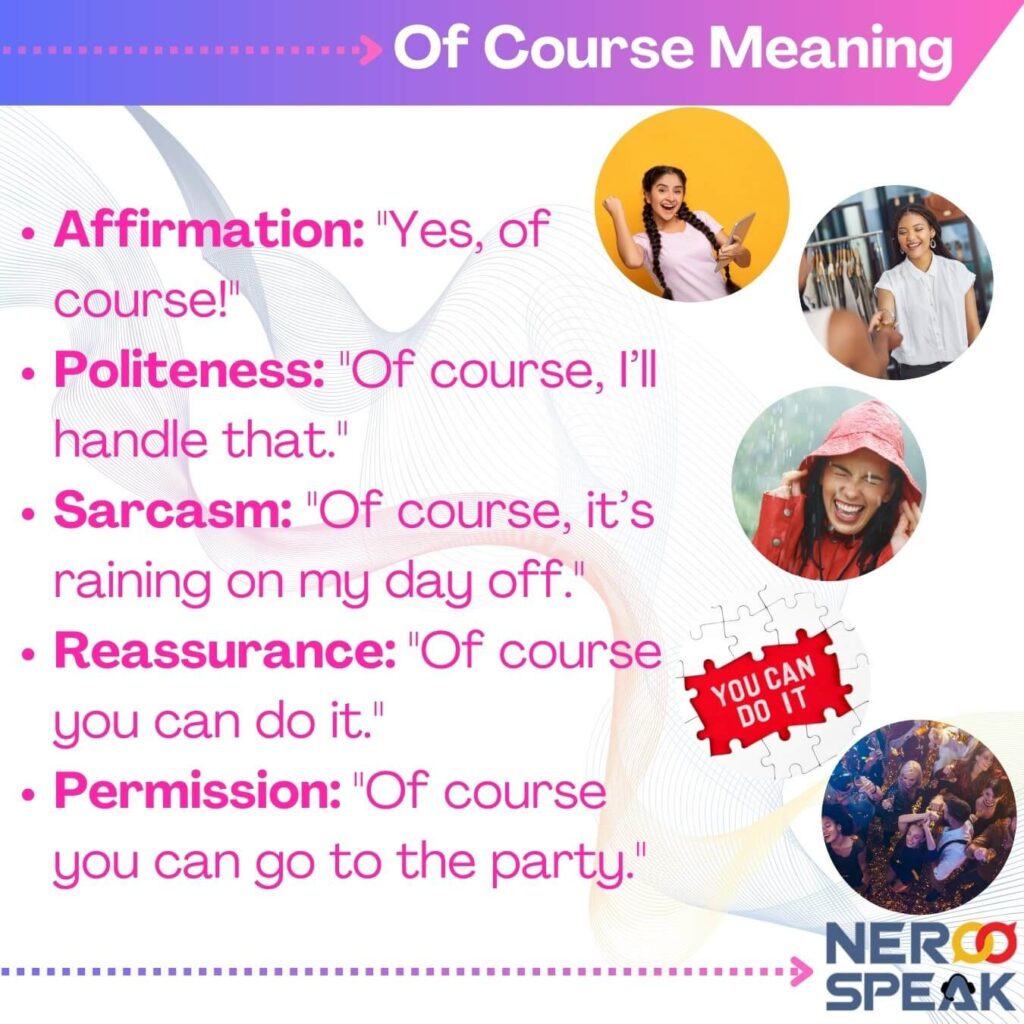
Of Course Meaning Neroo Speak
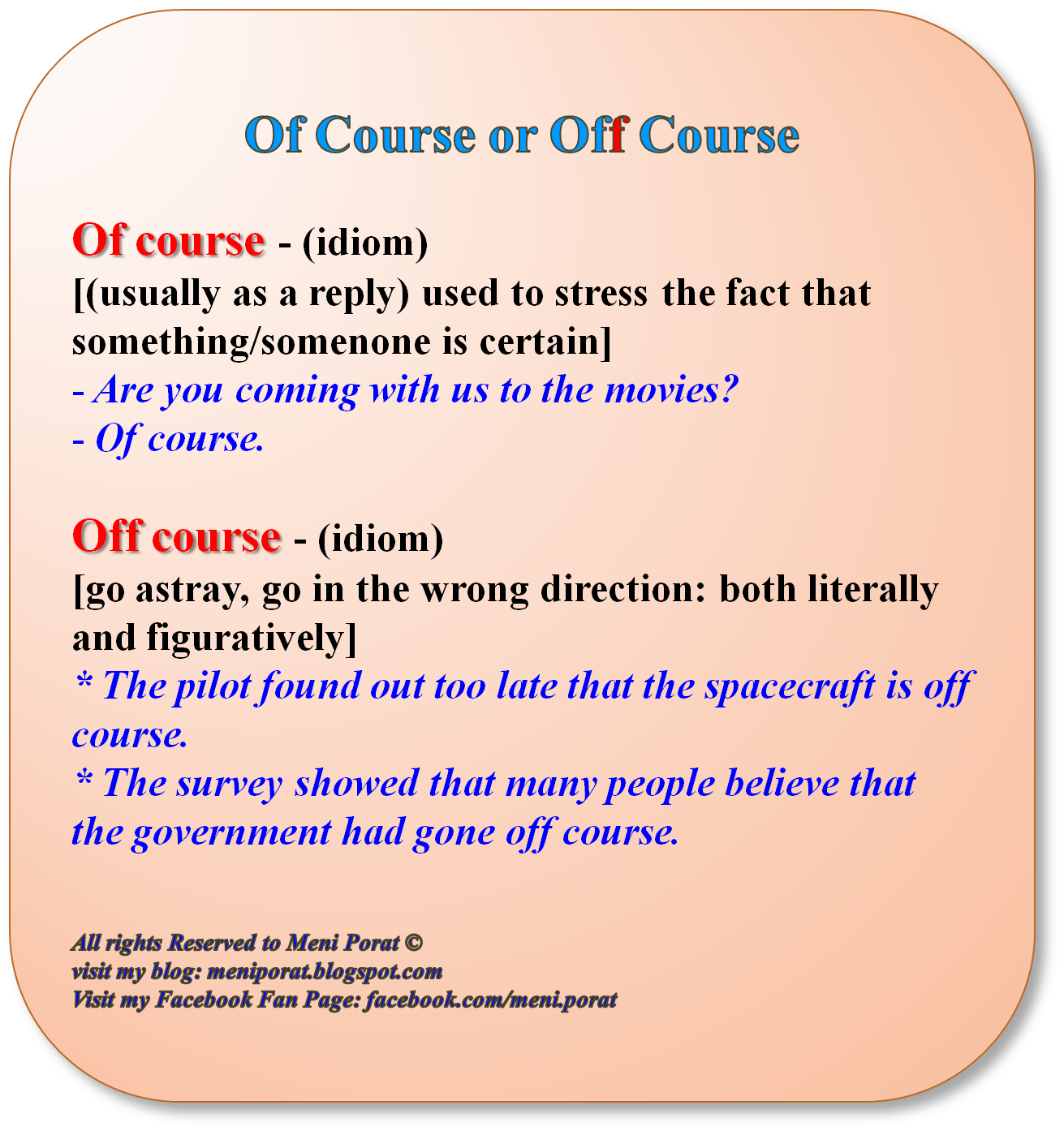
הבלוג של מני Of Course or Off Course?

50 Forms of Verb in English, V1 V2 V3 List English Study Here

Matterofcourse — MATTEROFCOURSE definition YouTube

Of course Meaning in Hindi Meaning of Of course in Hindi Of course
‘Of Course’ or ‘Ofcourse’ Which is Correct?

Of course or ofcourse which form is correct? Difference…
‘Don’t You Like My Mother?’ ‘Of Course I Do!’ ♢ ‘Will You Be There?’ ‘Course I Will.’
We Use Of Course To Refer To Things That Are Obvious Or Already Known To The Speaker And Listener, Or To Everybody:
'The Wine's Over There On The Chest,' She Said, 'I Had The Waiter Open It.' B:
Check Out The Pronunciation, Synonyms And Grammar.
Related Post: